
The Telegram
A phone is the wrong object for a five-year-old. The Telegram is a button: hold it, talk, and a paper letter chatters out on Grandma's end a minute later.
A kid holds a button, talks and lets go, and a paper telegram prints at Grandma's house.
The Telegram is two identical boxes, one in each house. Each has a thermal receipt printer, a Raspberry Pi, a microphone and one big arcade button. The words are transcribed on the way. Grandma answers the same way, so both ends are senders and both are receivers.
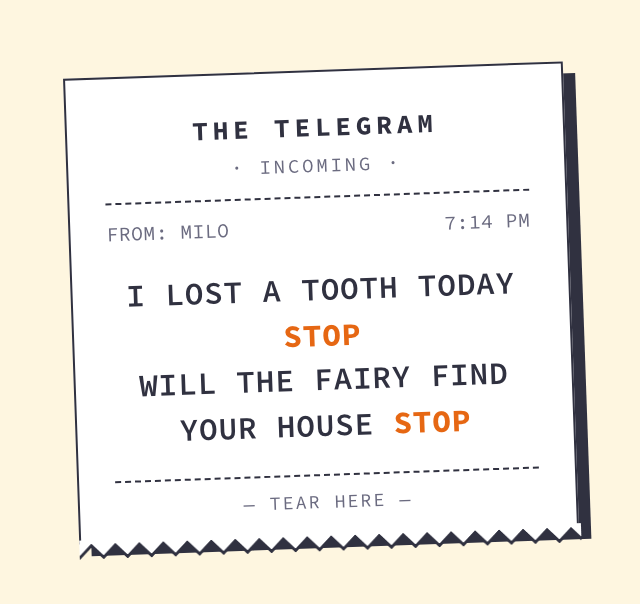
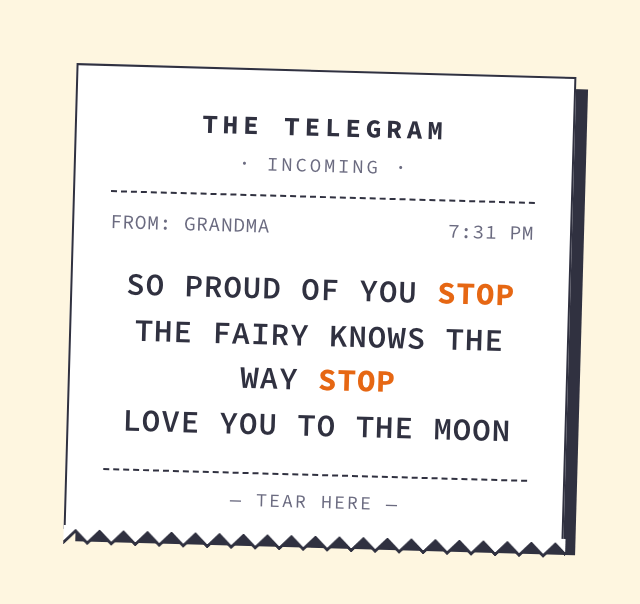
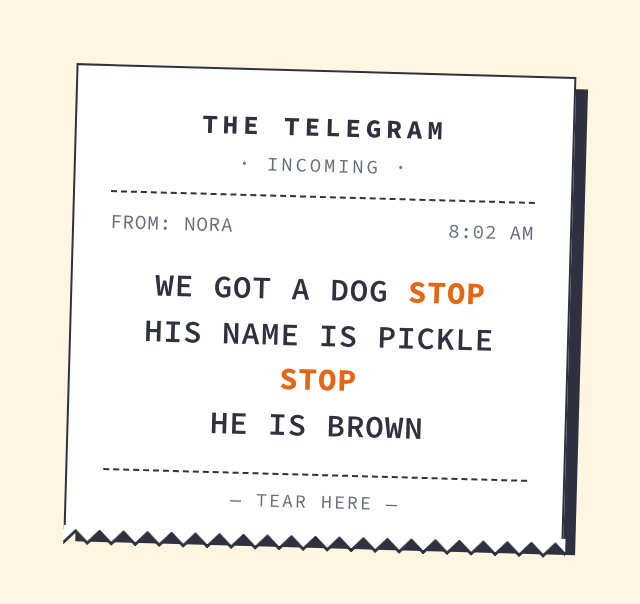
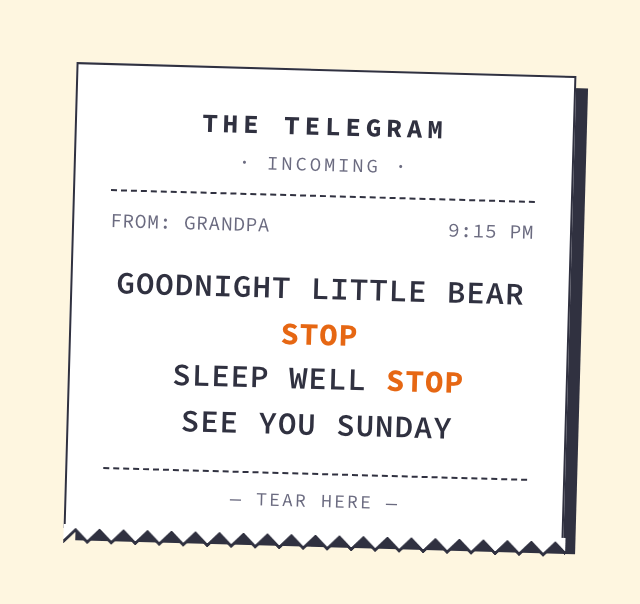
The receipt is the product, so it was drawn before anything was wired
Those four are mockups from the concept one-pager, written in both directions: Milo tells Grandma about his tooth at 7:14 and her answer prints at his house at 7:31. Each one carries a sender, a time, the message in capitals with STOP between sentences, and a tear line. Whether the words print exactly as the kid said them or get set into that telegram form is still an open question. The mockups show the telegram form.
- Interface
- One arcade button
- Printer
- ESC/POS thermal, 58 or 80mm, $60 to $150
- Brain
- Raspberry Pi, always on
- Relay
- A Supabase table each box listens to, or the home network if both are in one house
Letting go of the button is the send
If Grandma's box is off, the message could wait in the relay and print in a stack when she turns it on. Not decided yet.
A four-year-old can't read a menu or type a text, and a phone is the thing parents are trying to keep away from them. The Telegram asks for one skill: hold, talk, release. There is no confirm step to get wrong. The mic only listens while the button is down. The open usability problem is the moment after release, since a kid who gets no sign the message went will press again. A light, a sound or a small SENT slip on the sender's own printer are the candidates.
Someone built this in 2021 and nobody sold it
The Yayagram, made by Manuel Lucio Dallo for a grandmother with arthritis, used a Raspberry Pi, a push-to-talk button, a mic and a thermal printer to trade messages over the Telegram app. It went around the Raspberry Pi blog and Hackaday and stopped there. The nearest products on sale each miss one half. Tin Can is a $100 landline for kids, live calls only, nothing left once you hang up. Yoto and Toniebox play content to a child and carry nothing between two people. Lovebox delivers a message to a box, but on a screen, for adults.
Two printers per sale, and paper is the only refill
The hard part is money. Yoto and tonies make theirs on cards and figures sold for years after the player. The Telegram ships two devices per customer and its only consumable is receipt paper. Toymail, a two-way voice toy for kids that went on Shark Tank in 2017, closed in November 2018. It cost about $20 to build each toy, before the cloud bill.
The first check is one pair built from off-the-shelf parts. A product version would also transcribe on the box and delete the audio, which fits the voice exception in the 2025 COPPA rule, and print on phenol-free paper, which is safer for kids and fades faster.
Want to talk about The Telegram?
Get in touch →coachhouse.so/the-telegram